
The ReMembering and ReEnchanting Podcast
Conversations
Conversations with amazing people connecting what is all too often disconnected
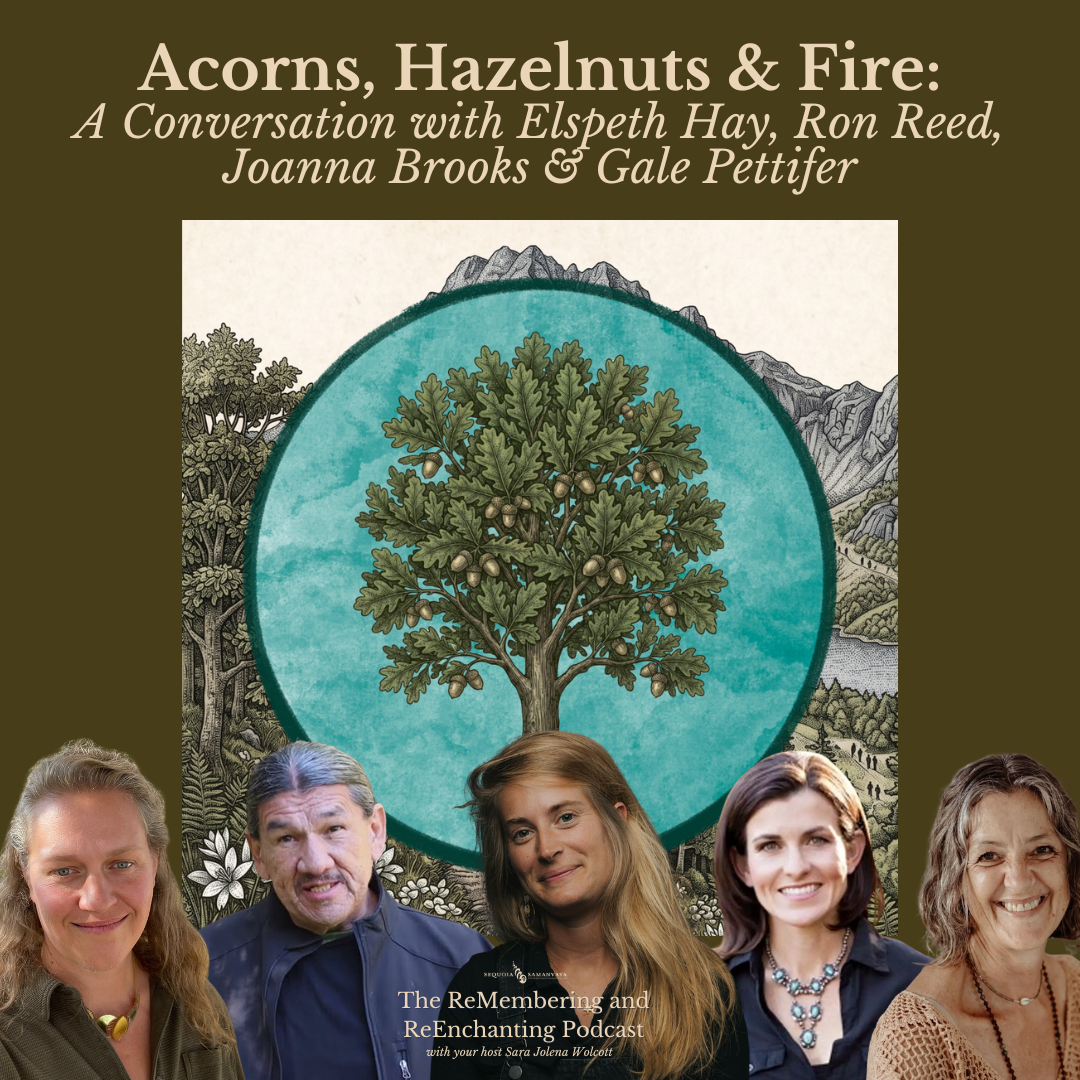
In this episode, we are uplifting some of the ideas in Elspeth Hay’s remarkable book, Feed Us with Trees: Nuts and the Future of Food. After starting with Sara Jolena offering a summary of some of the big ideas in the book, we move into a conversation with author Elspeth Hay and a few of the many people whom Elspeth has mentioned in the book: Ron Reed, Karuk tribal member and cultural biologist; Joanna Brooks, settler scholar and author of Why We Left; and Gale Pettifer, commoner and scholar of the New Forest in England. Together they trace a set of histories that turn out to be deeply entangled: Indigenous land dispossession in California, the enclosure of the English commons, the suppression of cultural burning, the erasure of ancestral foodways — and the folk songs, forest laws, and buried memories that survived all of it.
Timestamps
0:00 — Welcome & introduction: Sara Jolena introduces the episode, inspired by Elspeth Hay’s book Feed Us with Trees, and the “no farm, no food” myth it challenges.
2:51 — Guest introductions: Elspeth introduces Ron Reed (Karuk Nation, cultural biologist), Joanna Brooks (Why We Left), and Gale Pettifer (New Forest commoner and commons scholar).
5:44 — Ron Reed’s opening story: childhood memories of harvesting acorns, mushrooms, and salmon; the Klamath Dam removal; and the ongoing fight to restore Indigenous fire practices with public trust objectives.
9:20 — Gale Pettifer on the New Forest: a thousand years of contested common rights, Norman forest law, and what it means to still practice ancient commoning in the 21st century.
12:58 — Joanna Brooks on settler scholarship and song: tracing her European ancestry through folk ballads, a grandmother’s lullaby, and a plate of hazelnuts at the British Museum that the curators couldn’t explain.
18:29 — Fire across continents: Elspeth connects her experience of gorse burning debates in the New Forest to Ron’s work on cultural burning — the same argument, on opposite sides of the Atlantic.
30:58 — Dragons, sacred fire, and colonial memory: a discussion of how fire moved from sacred to feared in Anglo-Saxon and English tradition, illustrated by the New Forest dragon legend and the introduction of Christianity.
34:31 — Songs of grief and displacement: Joanna traces the emotional record of enclosure through English murder ballads — songs about hazel trees, beaver hats, and families starving off the land — and what they reveal about why colonial settlers “lost their minds.”
43:12 — Magna Carta, common law, and the 1877 New Forest Act: Gale traces how brutal Norman forest law paradoxically became the foundation of commoners’ rights, and how public outcry saved the New Forest from privatization.
47:33 — The allotment parallel: Elspeth draws a striking connection between English allotment gardens and the U.S. federal allotment system used to break up Indigenous tribal lands — the same word, the same colonial logic, on both sides of the ocean.
1:10:42 — Cycles of colonization and reverse transmission: Sara Jolena traces how colonial practices — from plantation timekeeping to fire suppression — were exported back to Europe, and the importance of distinguishing imperial forces from common people’s forces within every culture.
1:16:11 — Closing round: guests share what is shifting now — prescribed fire training in Wellfleet, MA; intergenerational transfer of fire ecology knowledge; the joy of reconnecting with the New Forest through free-roaming ponies — and an invitation to listeners to bring these ideas into their communities.
Elspeth Hay
Ron Reed
Joanna Brooks
Gale Pettifer
Recommended episode
